

Let’s be real: commercial real estate isn't getting any cheaper. Whether you’re opening a new restaurant, upgrading an office, or building out a massive entertainment venue, the "space struggle" is a universal headache. You want that high-end, spacious feel, but you’re working with a footprint that feels a little too tight for your ambitions.
The good news? You don’t always need more square footage. Usually, you just need a better plan.
At IFS Innovations, we’ve seen how smart design and modular furniture can transform a cramped floor plan into a high-performance environment. It’s about moving away from "fixed" thinking and embracing pieces that work as hard as you do. Let’s dive into how you can hack your layout to maximize every single inch without sacrificing that premium vibe.
The Power of Modular: Why "Fixed" is a Liability
In the old days, commercial furniture was bolted down and stayed there until the next major renovation. If you needed to host a private party in your restaurant or a collaborative workshop in your office, you were basically out of luck.
Modular furniture changes the game. We’re talking about pieces that can be stacked, moved, or reconfigured in minutes. This isn't just about convenience: it’s about future-proofing. When your business grows or your needs change, your furniture should be able to keep up without requiring a full demo and rebuild.
Pro Tip: Look for furniture with hidden casters or lightweight frames. It allows your staff to clear a floor for a special event without needing a moving crew.
Zoning Without Walls: Lessons from Fritz’s Adventure
One of the biggest space-wasters in commercial design is the permanent wall. Walls take up physical thickness, block natural light, and lock you into a specific layout. Instead, we like to use zoning.
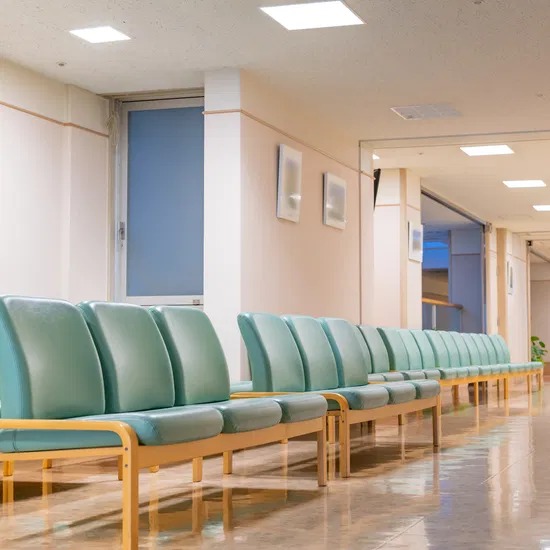
Take a project like Fritz’s Adventure. In dynamic environments like that, you have families, groups, and individuals all using the same space for different reasons. Instead of building walls, you can use modular seating, varying floor heights, or custom millwork to "suggest" different areas.
Using low-profile custom booth seating can create a sense of privacy for a group while keeping the visual lines of the room open. This makes the entire space feel much larger than it actually is.
Layout Hack #1: The Multi-Purpose Anchor
Every piece of furniture should have more than one job. If you have a bench in a waiting area, why not build storage into the base? If you have a bar height table in an office, it should have integrated power so it can double as a touchdown workstation.
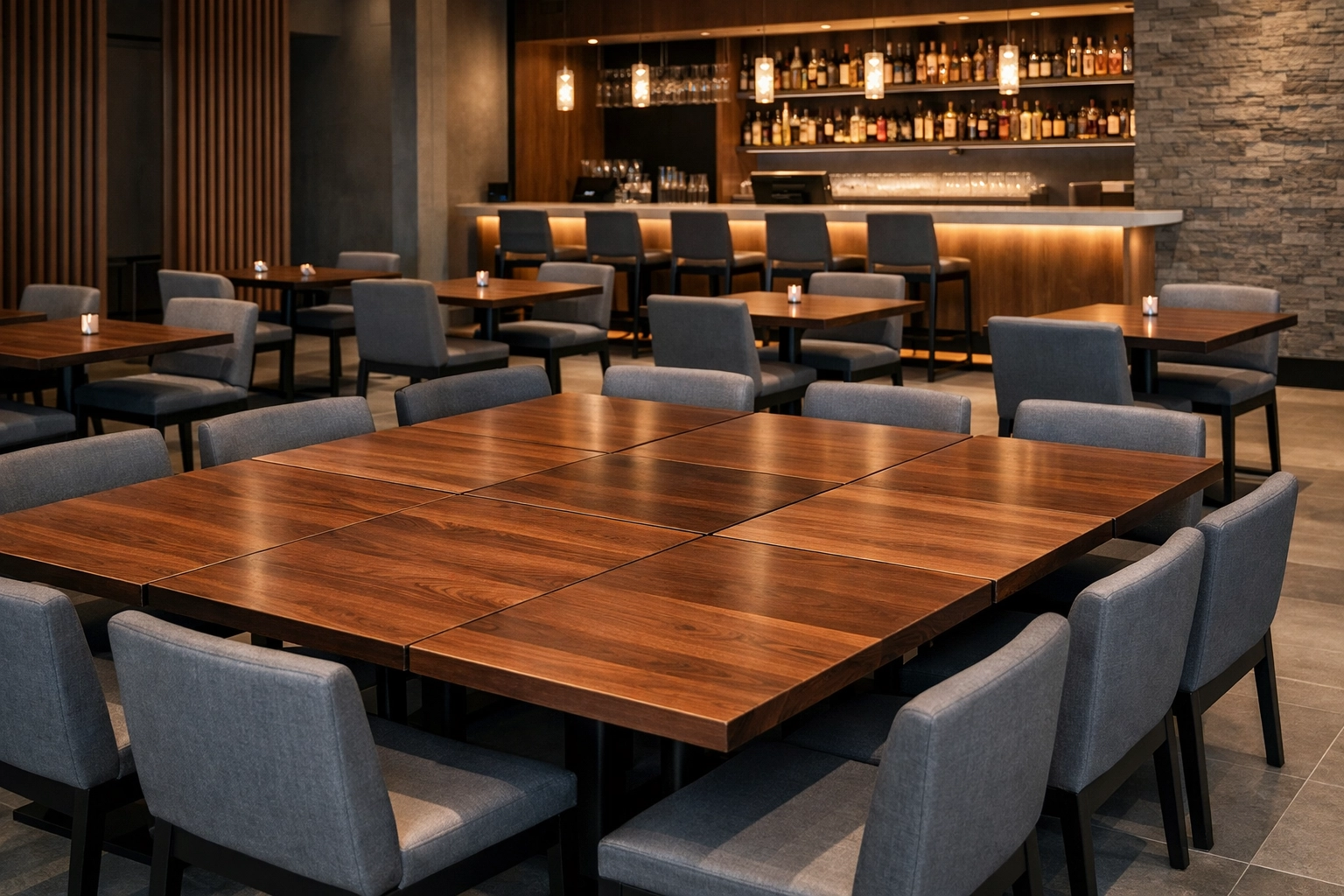
In hospitality, we often see owners struggle with the "four-top" problem. You have a bunch of tables for four, but a party of ten walks in. If your tables aren't modular, you’re losing money on that group. By using uniform, square-edged tables that can be pushed together seamlessly, you turn your dining room into a giant puzzle that always fits.
Layout Hack #2: Vertical Thinking
When you run out of floor space, look up. Vertical space is the most underutilized asset in commercial interiors.
- Wall-Mounted Everything: From shelving to lighting, keeping the floor clear creates a sense of "airiness."
- Custom Millwork: We love designing custom millwork that goes all the way to the ceiling. It provides storage for less-used items while acting as a stunning architectural feature.
- Tiered Seating: If you’re in a high-traffic entertainment venue, tiered "stadium-style" seating allows you to fit 30% more people into the same footprint compared to traditional chairs.
The Outdoor Advantage: Making the Most of the Patio
If you have an outdoor area, you have a secret weapon. Many owners treat the patio as an afterthought, but it should be treated as a primary dining or lounge zone.
Look at how we handled layouts for Popstroke. In outdoor environments, flexibility is even more important because you’re dealing with the elements. We use durable, modular outdoor furniture and pergolas to create defined "rooms" outside.
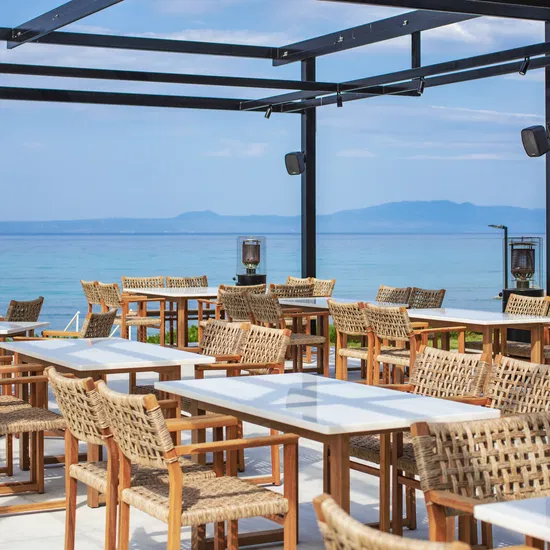
By using a black metal pergola or similar structures, you’re not just adding shade: you’re creating a ceiling. This psychological trick makes the outdoor space feel like a legitimate extension of your interior, effectively doubling your usable square footage.
Ergonomics and Space: A Tight Squeeze Shouldn't Be Uncomfortable
There is a fine line between "efficient" and "cramped." If your customers are bumping elbows or your employees can’t push their chairs out without hitting a wall, your layout is failing.
This is where ergonomics comes in. In a tight space, every inch of a chair's footprint matters. Choosing "slim-profile" chairs that still offer lumbar support allows you to fit more seats at a table without making the experience feel cheap or crowded.
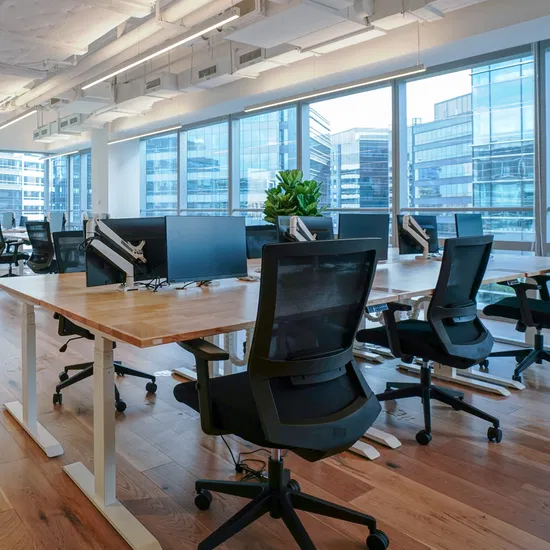
Pro Tip: In an office setting, swap fixed desks for adjustable sit-stand desks. Not only is it better for health, but sit-stand desks often have a smaller overall footprint than traditional executive desks, allowing for a denser (but still comfortable) layout.
The Single-Source Solution: Why Your Contractor Needs to Talk to Your Furniture Guy
Here is the biggest layout mistake we see: A developer hires an architect to design the space, a contractor to build it, and then: at the very end: tries to buy furniture to fit the rooms.
This almost always leads to "dead zones": corners that are too small for a table but too big to leave empty.
At IFS Innovations, we operate as a single-source solution. Because we handle the design, construction, and FF&E procurement, we make sure the furniture and the architecture are speaking the same language from day one. If we know you want a specific modular booth setup, we build the walls to accommodate it perfectly. One team, one contract, and zero "oops" moments.
Smart Tech Integration
In 2026, a "smart" layout isn't just about where the chairs go; it’s about where the data and power go. Integrated charging ports in modular sofas or tech-integrated conference tables allow people to work anywhere. This means you don't need a dedicated "computer station" taking up space in the corner. Every seat becomes a potential workspace.
Final Touches: Making It Your Own
When you’re working with a small space, the temptation is to keep everything white and minimal to make it feel "big." But don’t be afraid of character!
- Use Mirrors: A classic trick for a reason. A well-placed mirror on a custom millwork piece can double the visual depth of a room.
- Layer Your Lighting: Use pendant lighting to draw the eye to specific areas. It helps "anchor" your modular furniture pieces so they feel intentional, not just scattered.
- Go Custom: If the off-the-shelf table is 2 inches too wide, don't force it. Custom fabrication ensures the piece fits your space exactly, saving you from awkward gaps.
Managing a tight commercial interior doesn't have to be a headache. With a bit of modular thinking and a layout that prioritizes flexibility, you can create a high-performance environment that looks like a million bucks: regardless of the actual square footage.
Ready to stop fighting your floor plan?
Whether you’re looking for a full restaurant build-out or just need the right furniture to fix a cramped office, we’re here to help. Let’s grab a coffee and look at your blueprints together. We’ll help you find those extra feet you didn't know you had!